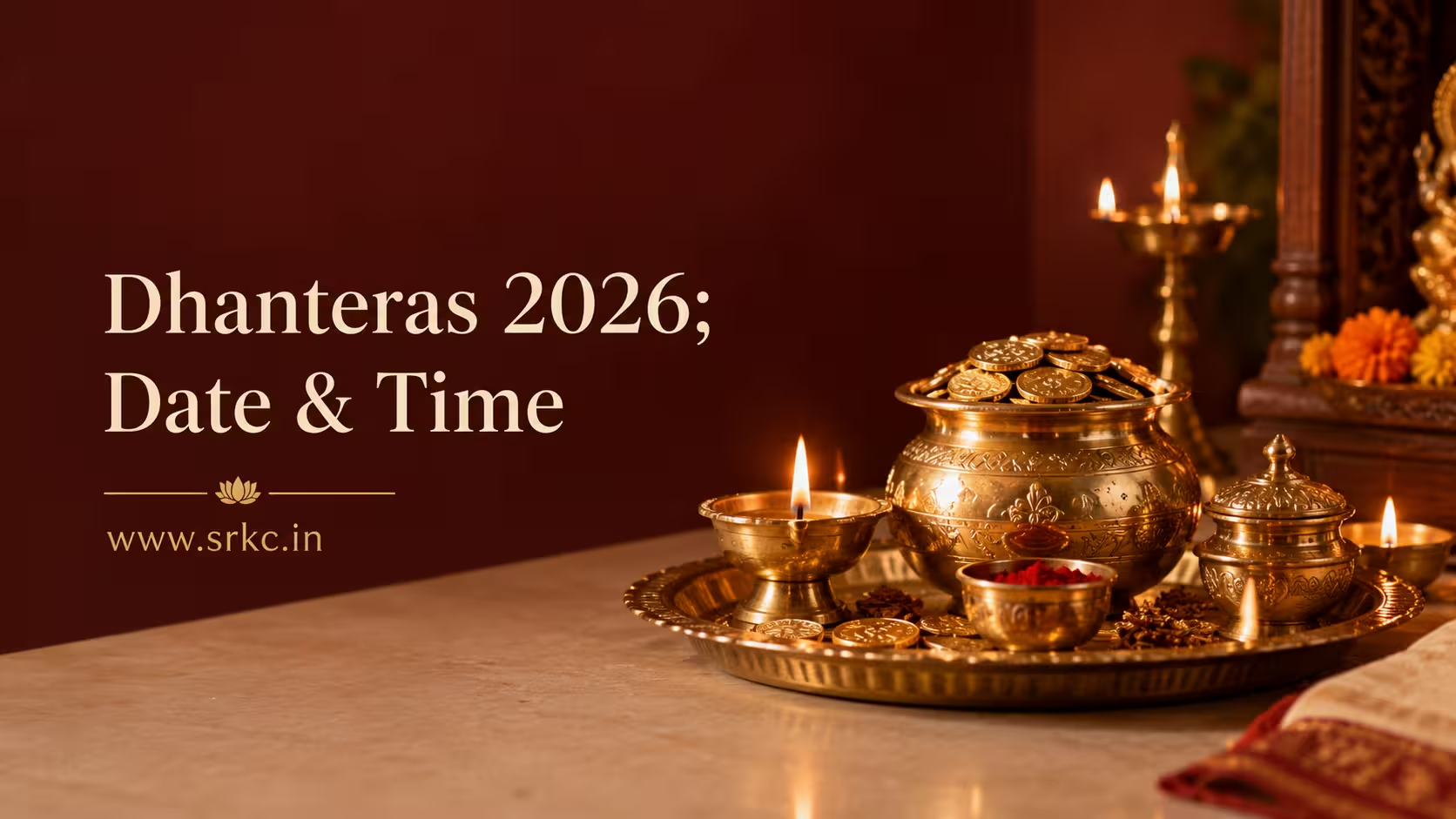
Dhanteras 2026: Date, Puja Muhurat, Significance & Seva
AI Overview & Key Takeaways
Dhanteras 2026 falls on Friday, 6 November, marking the quiet beginning of the five-day Diwali season. Lakshmi, Ganesh and Dhanvantari are worshipped together on this day. Dhanvantari is the deity of health and Ayurveda; true wealth is a healthy body. Buying gold, silver or a new utensil is considered auspicious; many also bring a new broom (jhadu). Homes are lit with diyas from evening onwards; Yam Deepdaan is performed. The festival is observed with quiet joy across Braj and the rest of Bharat.
As the sun softens and the first diyas begin to appear at thresholds, a quiet shift can be felt. The lanes of Gokul, the courtyards of Mathura, the balconies in cities far away — all start preparing for light. This is how Dhanteras arrives. Not with loud announcement, but with the gentle decision to begin the season of Diwali.
Dhanteras 2026 falls on Friday, 6 November. The tithi is Kartik Krishna Trayodashi. For many families this day is the true opening of the five-day Diwali cycle. From this evening the house is kept brighter, the puja space is cleaned with extra care, and a sense of quiet expectation settles in.
When is Dhanteras 2026 and what are the timings?
In most of North India the day is observed on 6 November. The Trayodashi tithi begins in the morning of the 6th and continues into the morning of the 7th, so the evening puja is performed on Friday.
For New Delhi the published puja muhurat is roughly 6:02 PM to 7:57 PM, falling within Pradosh Kaal. Timings shift slightly from city to city according to local sunset. It is always wise to check a reliable local panchang for the exact window where you live.
Why Dhanteras matters
The word itself holds two meanings. “Dhan” speaks of wealth, and “teras” points to the thirteenth day of the dark fortnight. Yet the wealth remembered on this day is not only metal or coin. It is also health, steadiness, and the quiet capacity to care for one’s family.
On Dhanteras, Lakshmi, Ganesh and Dhanvantari are worshipped together. Lakshmi is invited for prosperity and grace. Ganesh is remembered so that obstacles may be removed. And Dhanvantari — the divine physician who emerged from the ocean during the Samudra Manthan carrying the pot of amrit — is honoured as the deity of health and Ayurveda.
Many elders still say that the real dhan is a nirogi kaya. A body that can serve, a mind that stays steady, a home that feels peaceful — these are the true riches. Worshipping Dhanvantari on this day is a simple prayer for that kind of wealth.
Lights, gold and the new broom
From Dhanteras evening the house is kept lit. Diyas are placed at the entrance, in the courtyard, near the tulsi, and in the puja space. The tradition of Yam Deepdaan — lighting a lamp for Yamraj — is also observed in many homes as a prayer for protection and long life.
Buying something new is considered auspicious. Gold or silver, even a small coin or a simple piece of jewellery, is traditionally brought home. New metal utensils also find a place in many households. And in countless homes a new broom — a jhadu — is purchased. The broom is seen as a quiet companion of Lakshmi; it is believed to sweep away lack and invite cleanliness and grace into the house.
These are not rigid rules. Families follow what their elders taught them, according to their means and their own understanding. The intention remains the same: to welcome abundance in every form — material, physical and quiet.
A simple way to keep the day
Clean the entrance and the puja space. Light diyas as evening comes. Place a small image or murti of Lakshmi, Ganesh and, if available, Dhanvantari. Offer flowers, a little sweets or fruits, and the new items purchased that day. Many recite a short prayer for health and steady prosperity.
Across Braj the day is kept with the same gentle enthusiasm seen in homes throughout Bharat. The streets begin to glow a little earlier, the markets fill with people choosing a small piece of gold or a new utensil, and children watch the first diyas being lit. The festival does not demand grand gestures. It asks only for sincerity and a clean, lit home.
If you are preparing the puja space this year and need simple diyas, thalis or other seva essentials, they can be found at srkc.in or at the store in Gokul. What matters most, however, is the care with which the day is held.
May this Dhanteras bring good health and quiet prosperity to you and your family. May the light that begins tonight stay steady through the season ahead.
Radhe Radhe.
Frequently Asked Questions
Common questions and Vedic insights related to Dhanteras 2026: Date, Puja Muhurat, Significance & Seva.
Dhanteras 2026 falls on Friday, 6 November. The Trayodashi tithi begins in the morning of 6 November and continues into the morning of 7 November, so the evening puja is observed on the 6th.
Vraddhi Kaushal
Authored and curated under the guidance of traditional sthapatis and artisans at SRKC. Every piece and blog is steeped in Shilpa Shastra, Agama Shastra, and centuries of temple dedication.